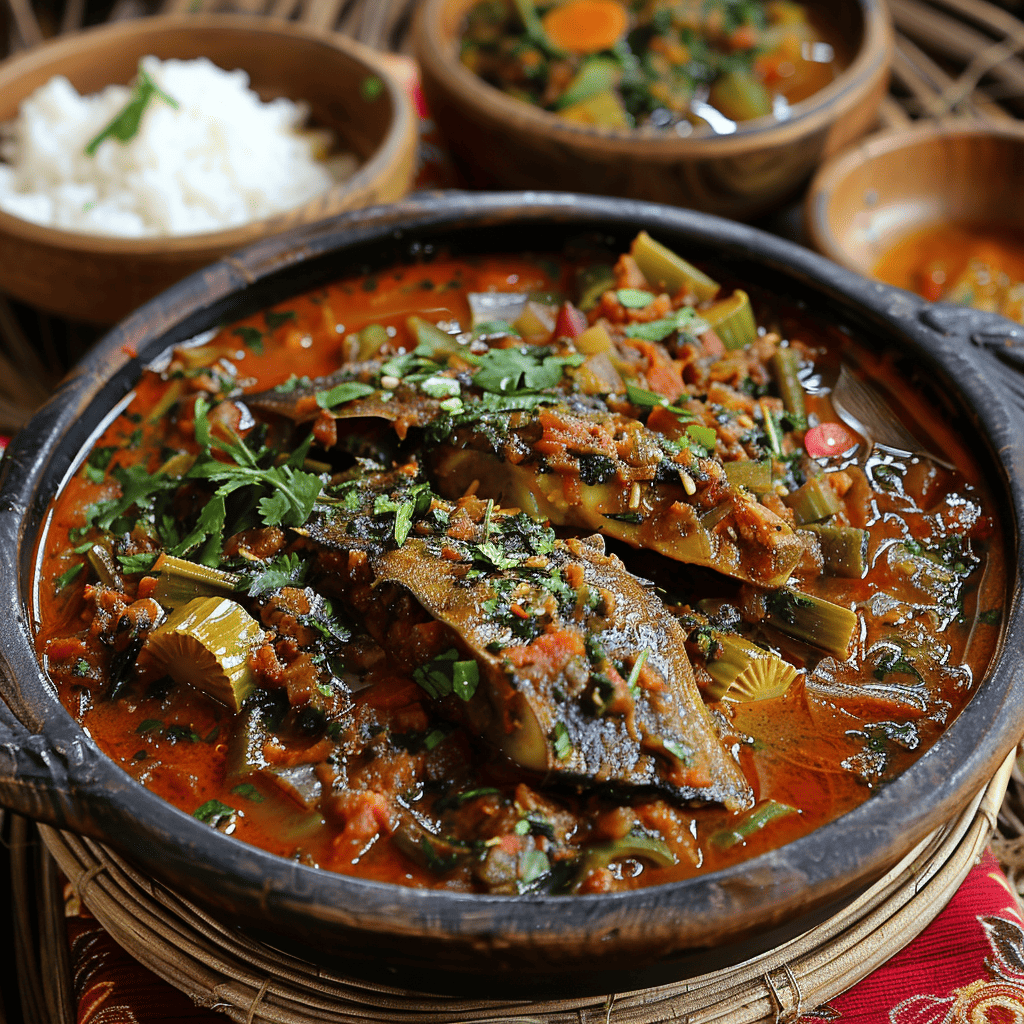
Sierra Leonean Cassava Leaf Stew – Rich, Earthy & Satisfying
5. February 2026
Libyan Bazin – Barley Bread with Herb & Potato Stew
7. February 2026Difficulty
Intermediate
Prep time
30 minutes
Cooking time
2 hours
Makes
6 servings
Gluten-Free
Yes
Dairy-Free
Yes
Description
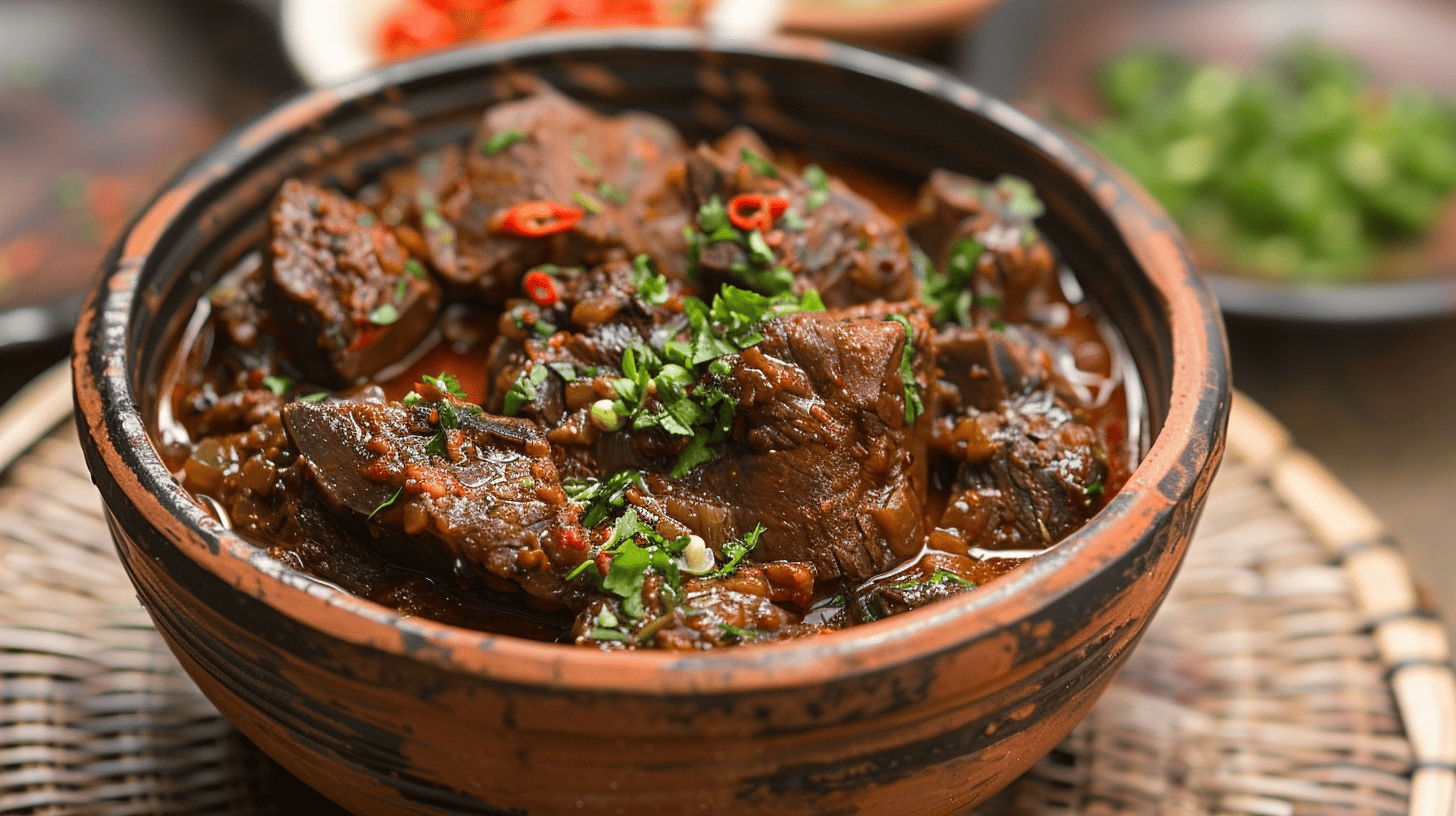
Inspired by the rich, game-based stews of the Central African rainforest, this dish offers a modern, sustainable twist. Goat meat provides a similar deep, earthy richness to traditional bushmeat, while a fiery blend of peppers and native spices creates an intense, warming experience. It’s a hearty, potent stew for cold nights, for lovers of bold, unapologetic flavors, and for anyone curious about the foundational tastes of one of the world’s most biodiverse regions.
Instructions
- Marinate the Meat – The Flavor Tattoo Begin by creating the potent spice paste that will define every bite. In a blender or using a mortar and pestle, combine the peeled garlic cloves, the fiery Scotch bonnet and pili pili chilies (seeds included for maximum heat, adjust to your courage), the smoked paprika for depth, and the aromatic grains of paradise. Add just a splash of water—enough to get the blades moving but not so much that it becomes a runny sauce. Blend into a coarse, vibrant red paste. It should have texture, not be perfectly smooth. This paste is not merely a coating; it’s a flavor injection. Place your goat meat chunks in a large, non-reactive bowl. Using your hands (gloves are highly recommended when handling these chilies), massage the paste aggressively into every nook and cranny of the meat. Ensure each piece is thoroughly stained and coated. Cover the bowl tightly and refrigerate. Marinate for at least one hour, but for a truly transformative experience, let it rest overnight. This extended time allows the capsaicin from the chilies, the enzymes from the garlic, and the spices to penetrate deeply, beginning the tenderizing process and ensuring the flavor is woven into the very fiber of the meat, not just sitting on the surface.
- Sear & Brown – Capturing the Essence of Fire When ready to cook, remove the meat from the refrigerator to lose its chill. In your heaviest, thickest pot—a cast-iron Dutch oven is ideal—heat the red palm oil over medium-high heat until it shimmers and its earthy scent fills the air. Shake off excess marinade from the meat pieces. Working in careful batches to avoid crowding (which steams rather than sears), place the meat in the hot oil. Do not disturb for a solid 4-5 minutes, allowing a formidable, dark, caramelized crust to form. This Maillard reaction is non-negotiable; it creates the complex, savory foundation for the entire stew. Turn the pieces with tongs and repeat on all sides until they are uniformly seared and deeply browned. This is not a quick step; it is the building of flavor reserves. Remove the browned meat to a plate, leaving the glorious, spice-flecked fond in the pot.
- Build the Fiery Base – The Aromatic Alchemy Reduce the heat to medium. In the same pot with the rendered fat and fond, add the chopped onions. A pinch of salt will help them sweat. Sauté, stirring occasionally, for 6-8 minutes until they soften and turn translucent, absorbing the colors and flavors left behind. Now, add the tomato paste. Stir it into the onions and cook for a full 2-3 minutes, letting it fry and darken from bright red to a deeper brick shade. This "cooking out" of the tomato paste removes any tinny raw flavor and concentrates its umami sweetness, which will balance the coming fire. Return all the seared meat and any accumulated juices to the pot. Scrape in every last bit of the remaining marinade from the bowl—this is pure flavor. Stir everything together, allowing the meat to get coated in the fried tomato paste and onions.
- The Long, Fiery Simmer – The Patient Transformation Pour in enough broth to just barely submerge the meat. Add the crushed okazi leaves (the authentic, slightly bitter forest herb) or your bay leaf substitute. Bring the pot to a vigorous boil, then immediately perform the most important step: reduce the heat to the lowest possible setting your stove can maintain. You want the barest suggestion of a simmer, perhaps a single lazy bubble rising every few seconds. Cover the pot tightly. Now, you wait. Let it cook gently, undisturbed, for 1.5 to 2 hours. This is not a suggestion but a requirement. Goat meat is rich in connective tissue that needs this long, moist, slow heat to break down into gelatinous, succulent tenderness. During this time, the sauce reduces, concentrating the fierce heat of the chilies, the smokiness of the paprika, and the savory depth of the meat into an intensely flavored, thick gravy. The oil may rise to the surface—embrace it; this is part of its character. Resist the urge to stir too often; just a gentle check every 30 minutes to ensure it's not sticking.
- Final Brightness – The Spark of Life Once the meat is fork-tender and yields easily, remove the pot from the heat. Now, stir in the fresh lemon juice. This is a critical moment of balance. The lemon's bright, sharp acidity does not diminish the heat but instead lifts and defines it, cutting through the richness of the meat and oil, and preventing the stew from being one-dimensionally heavy. Taste the sauce—it should be a powerful, layered assault of spicy, smoky, savory, and now bright notes. Adjust with salt, knowing the flavors are intense.
- To Serve: This is a warrior's stew. Ladle it generously into bowls. It demands a very bland, starchy counterpart to temper its fire and soak up its glory. Serve it alongside substantial mounds of boiled yam, soft plantains, or plain white rice. The neutral starch is not an afterthought; it is an essential partner, providing relief and allowing you to fully appreciate the stew's magnificent intensity.
Ingredients
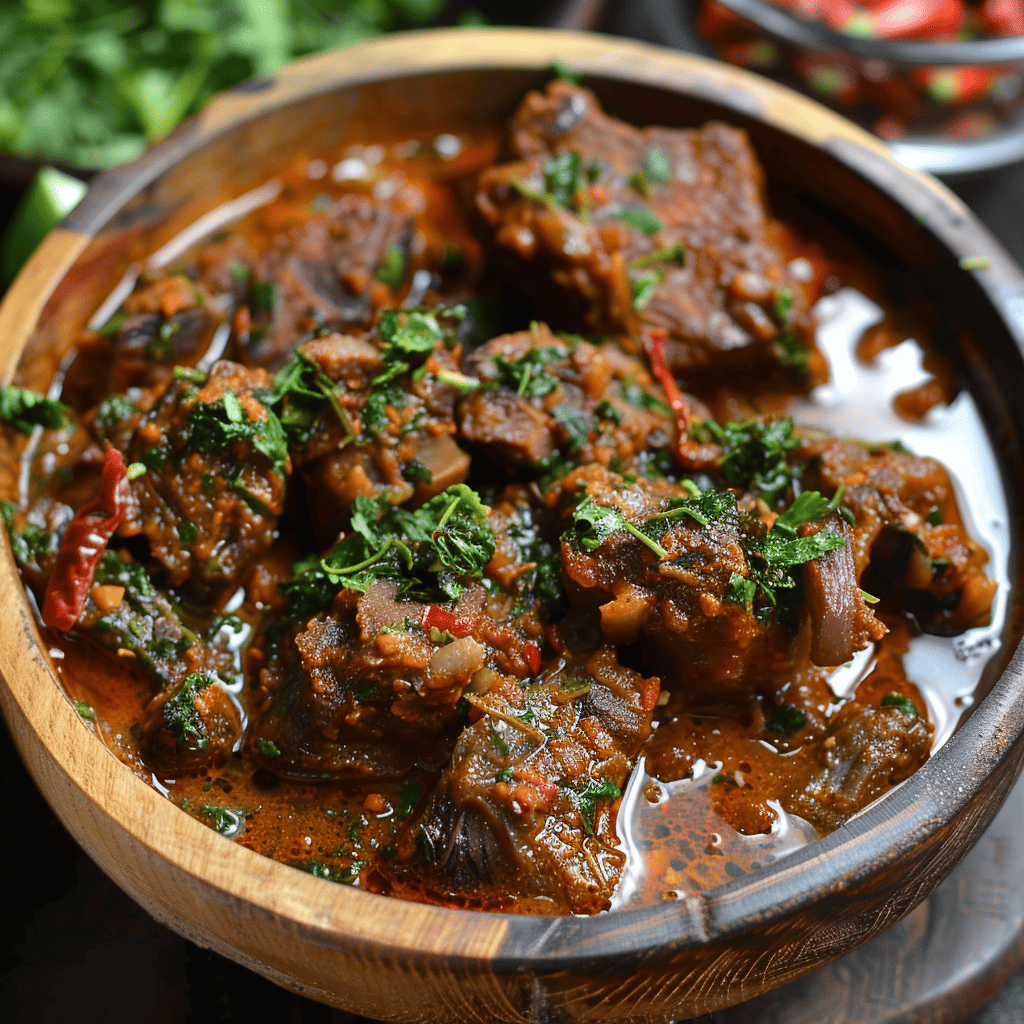
- 🐐 1.5 kg goat meat (shoulder, leg), cut into chunks
- 🧅 3 onions, chopped
- 🧄 1 whole head garlic, peeled
- 🔥 Spice Paste: 4 scotch bonnets, 2 tbsp pili pili (African bird's eye chili), 3 tbsp smoked paprika, 2 tsp grains of paradise (or black pepper)
- 🌿 4-5 crushed okazi/ukazi leaves (or 3 bay leaves)
- 💧 1.5 liters beef or goat broth
- 🍋 Juice of 1 lemon
- 🫒 3 tbsp red palm oil
- 🧂 Salt

About us
Dive into the unique world of African flavors with Nana! From traditional family recipes to modern creations, Nana brings the diversity and magic of the African continent straight to your kitchen. Get inspired, try authentic and creative dishes, and discover the heartfelt soul of African cuisine on your plate.