Ghanaian Groundnut Soup (Nkatekwan) with Chicken & Spinach
15. January 2026
Tunisian Shakshuka with Merguez – Baked Eggs in Spicy Tomato Sauce
17. January 2026Challenging
45 minutes
1.5 hours
6 servings
Gluten-Free
Yes
Cameroon’s Culinary Crown Jewel – For the Patient Perfectionist
Instructions
- Prep the Bitterleaf – The Art of Taming Bitterness
This first stage is non-negotiable and sets the stage for the entire dish. If using dried bitterleaf (the most common form found internationally), place it in a large bowl and cover with at least three times its volume of lukewarm water. Let it soak for a minimum of one hour, or up to three, to rehydrate and begin leaching out its intense bitterness. The water will turn a murky green—this is a good sign. Drain, then transfer the leaves to a large pot of fresh, boiling water. Boil vigorously for 15-20 minutes.
This second boiling is critical for safety and palatability, as it further removes bitterness and any potential toxins. Drain again, and now comes the essential step: using your hands (protected with gloves if sensitive), squeeze the cooked leaves in small fistfuls over the sink with all your might, wringing out every drop of bitter, dark liquid. You'll be left with a compact, dark green mass. Finally, chop this mass very finely, almost mincing it, to ensure it integrates seamlessly into the stew.
If you are fortunate to have fresh bitterleaf, the process is quicker but just as important. Remove the leaves from their tough central stems. Bring a large pot of salted water to a rolling boil. Blanch the leaves for 4-5 minutes until they wilt and turn a brighter green. Immediately plunge them into an ice bath to stop the cooking and set the color. Drain thoroughly and then chop or pulse in a food processor to a coarse, pesto-like consistency. - Cook Proteins & Make Broth – Building the Umami Foundation Now, build your flavor base. Season the beef strips generously with salt. In your heaviest, largest pot (a Dutch oven is ideal), heat the red palm oil over medium-high heat until it shimmers. Working in batches to avoid steaming, brown the beef strips on all sides until they develop a deep, caramelized crust. This Maillard reaction creates the fond—the flavor gold—at the bottom of the pot. Remove the beef and set aside. In the same pot, reduce the heat to medium. Add the two chopped onions and sauté, stirring occasionally, for 6-8 minutes until soft and translucent. Add the minced garlic and grated ginger, stirring constantly for 60 seconds until their raw scent transforms into a warm, fragrant perfume. This awakens their essential oils. Return the browned beef and any accumulated juices to the pot. Pour in the broth—if you have time, a homemade broth made from simmering the shrimp shells with the beef bones is transcendent. Bring to a boil, then immediately reduce the heat to the gentlest possible simmer. Cover and let it cook for 45 minutes to an hour, until the beef is fork-tender. This slow simmer extracts the beef's richness and creates a deeply savory broth. In a separate skillet, heat a teaspoon of palm oil over high heat. Add the peeled shrimp and sauté for just 60-90 seconds per side, until they turn pink and are just cooked through. Remove immediately to prevent them from becoming rubbery. They will finish cooking later in the stew.
- Create the Peanut Base – The Heart of the Dish While the beef simmers, focus on the peanuts. If using raw peanuts, spread them in a single layer in a dry skillet over medium-low heat. Toast them, shaking the pan frequently, for 5-7 minutes until they are fragrant, lightly golden, and their skins begin to crackle. Let them cool slightly, then grind them in a food processor or with a mortar and pestle until you have a coarse meal, somewhere between sand and fine breadcrumbs. Avoid grinding them into butter. If using pre-ground peanuts or peanut butter, you can lightly toast the powder in the dry pan for just 60 seconds to awaken its oils. Once the beef is tender, stir the ground toasted peanuts and the ground dried crayfish (a potent umami booster) into the pot. Stir vigorously. The mixture will be very thick, absorbing much of the broth to form a dense, nutty paste that coats the beef. This is the rich, creamy heart of the Ndolé.
- Unify the Stew – The Long, Slow Marriage of Flavors Now, introduce the star. Add all of your prepared, squeezed, and chopped bitterleaf to the pot, along with the remaining sliced raw onion for a bit of sharp sweetness. Stir with great effort—the stew will be extremely thick and dense. Add a splash of water or broth only if it seems unmanageably dry. Reduce the heat to the absolute lowest setting. Cover the pot and let the stew simmer slowly for 30 to 40 minutes. This long, patient cooking is where the magic happens. The fierce bitterness of the leaf mellows, integrating with the rich peanut paste and savory beef broth. The stew will darken to a deep forest green and thicken to a consistency akin to a thick risotto. Stir every 10-15 minutes to prevent sticking, scraping the bottom with a wooden spoon.
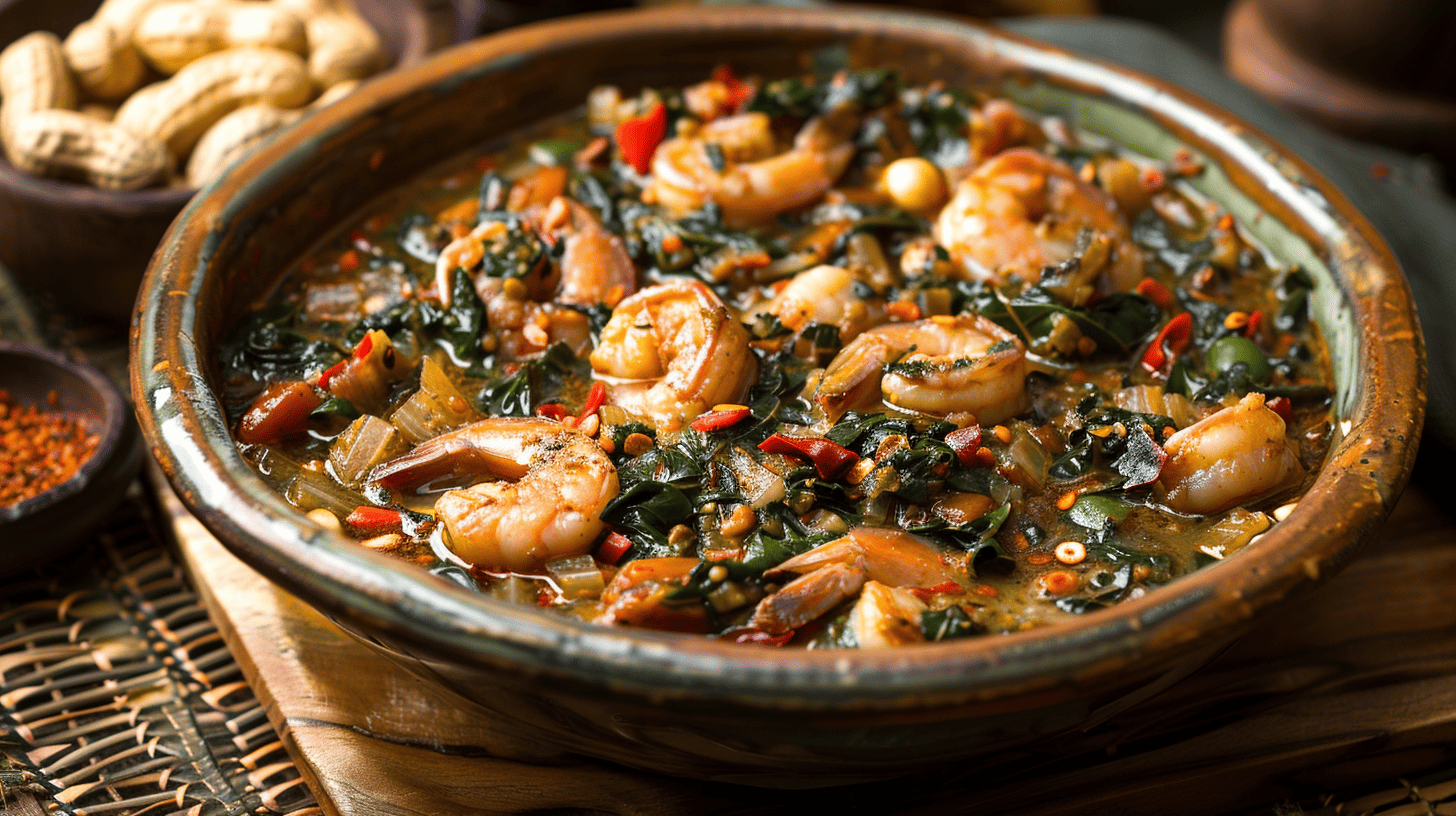
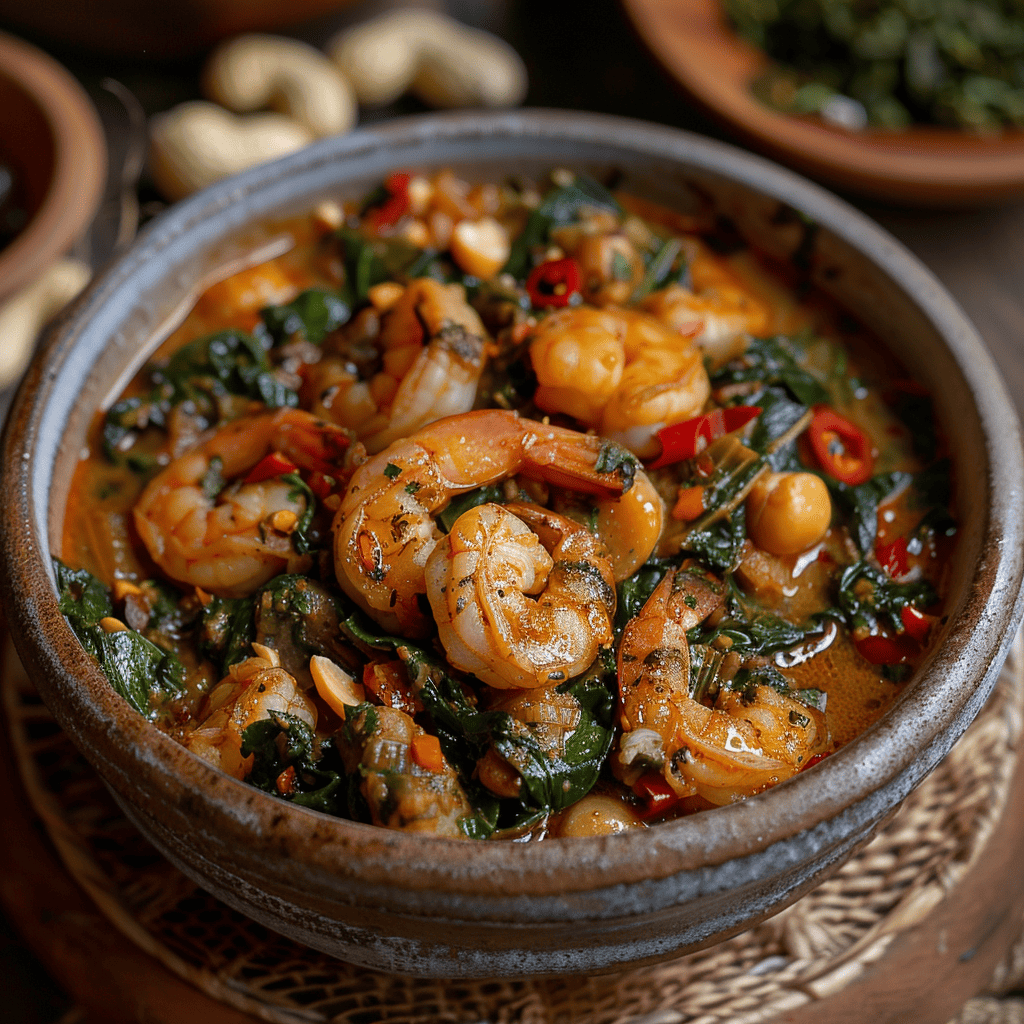
- Finish with Shrimp – The Final Layer of Sweetness About 10 minutes before the end of cooking, gently fold in the reserved sautéed shrimp and add the whole habanero peppers. The shrimp will heat through and absorb the flavors without overcooking, and the whole peppers will infuse a pervasive, fruity heat. Now, taste. The stew is a complex orchestra: the bass notes of beef and peanut, the alto bitterness of the leaf, the sharp soprano of the raw onion, and the heat of the pepper. It will almost certainly need seasoning. Add salt and a crumbled Maggi cube (a cornerstone of West African seasoning) to taste, stirring well to dissolve.
- To Serve: Ladle the thick, magnificent stew into a bowl. The traditional and perfect accompaniments are bobolo (fermented, steamed cassava sticks) or boiled plantains, which provide a soft, neutral canvas. Rice is also a common and delicious choice. The stew is rich and substantial, so a little goes a long way.
The Bitterleaf Balance – Understanding the "Why"
The bitterness is not a flaw to be eliminated; it is the defining characteristic, the sophisticated edge that makes Ndolé extraordinary. Proper preparation through soaking and boiling doesn't remove it—it refines it. It tames the aggressive, astringent bitterness into a pleasant, cleansing note that cuts through the unctuous richness of the peanut and beef fat. This creates a dynamic tension on the palate that is both challenging and deeply satisfying. It is an acquired taste that, once appreciated, becomes a lifelong craving. This balance is the very soul of the dish.
A Dish of Prestige – The Social Significance of Ndolé
In Cameroon, Ndolé is more than food; it is a symbol of status, celebration, and culinary mastery. Its colloquial name, "the dish that brings peace to the family," speaks volumes. Its elaborate, time-consuming preparation means it is seldom an everyday meal. It is the centerpiece of major life events: Sunday family gatherings after church, national holidays, and, most importantly, weddings. Serving Ndolé to guests is a profound gesture of honor and generosity. A cook's reputation can be made by their Ndolé, and its presence on a table signals that the occasion is one of true importance and joy. It is a dish that carries the weight of tradition and the warmth of shared celebration.
Ingredients
- 🌿 300g dried or fresh bitterleaf (substitute: kale + spinach, blanched)
- 🍤 300g shrimp, peeled (reserve shells for broth)
- 🥩 300g beef (flank steak), cut into strips
- 🥜 250g raw peanuts, ground (or 1 cup smooth peanut butter)
- 🧅 3 onions, 2 chopped, 1 sliced
- 🧄 1 bulb garlic, minced
- 🫚 5 cm ginger, grated
- 🌶️ 3 habanero peppers
- 🐟 50g dried crayfish, ground (optional, for umami)
- 🫒 ½ cup red palm oil
- 💧 1.5 liters broth (from shrimp shells & beef)
- 🧂 Salt, maggi cube
About us
Dive into the unique world of African flavors with Nana! From traditional family recipes to modern creations, Nana brings the diversity and magic of the African continent straight to your kitchen. Get inspired, try authentic and creative dishes, and discover the heartfelt soul of African cuisine on your plate.