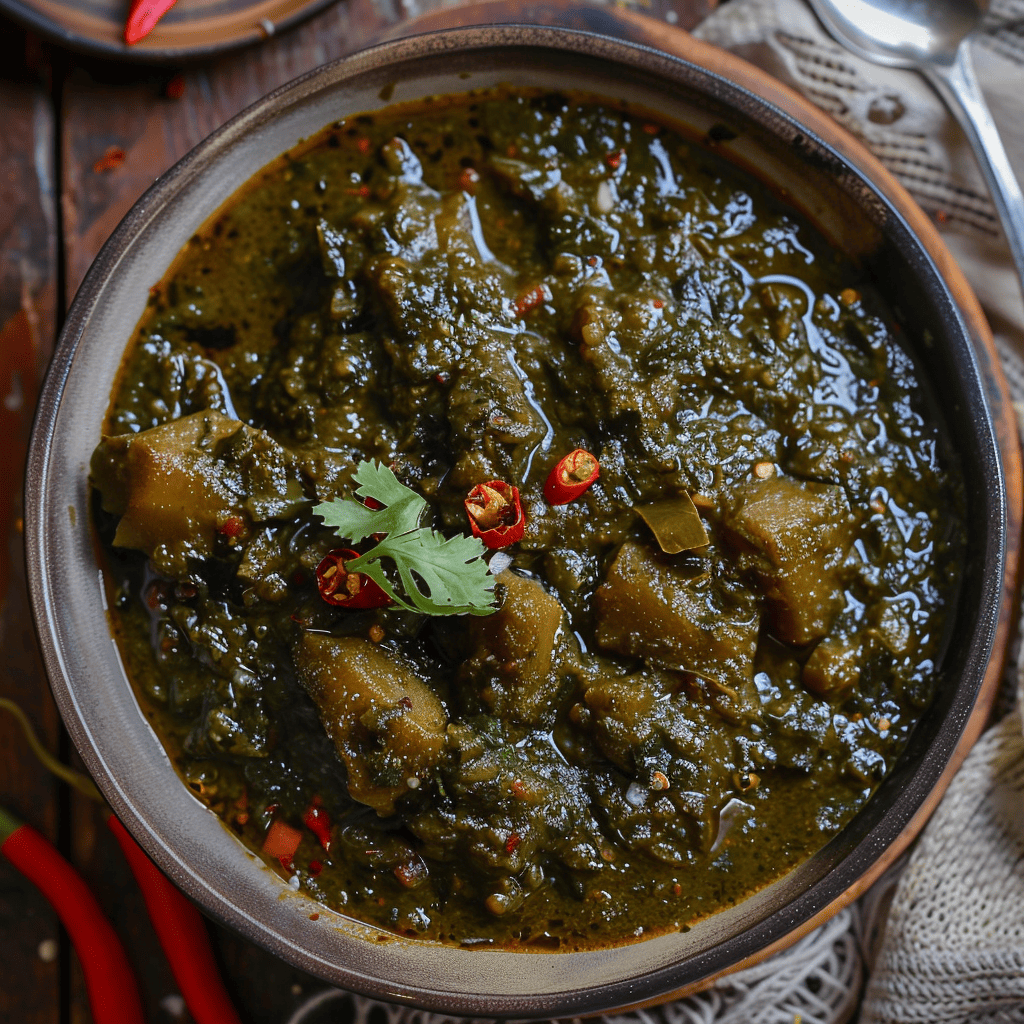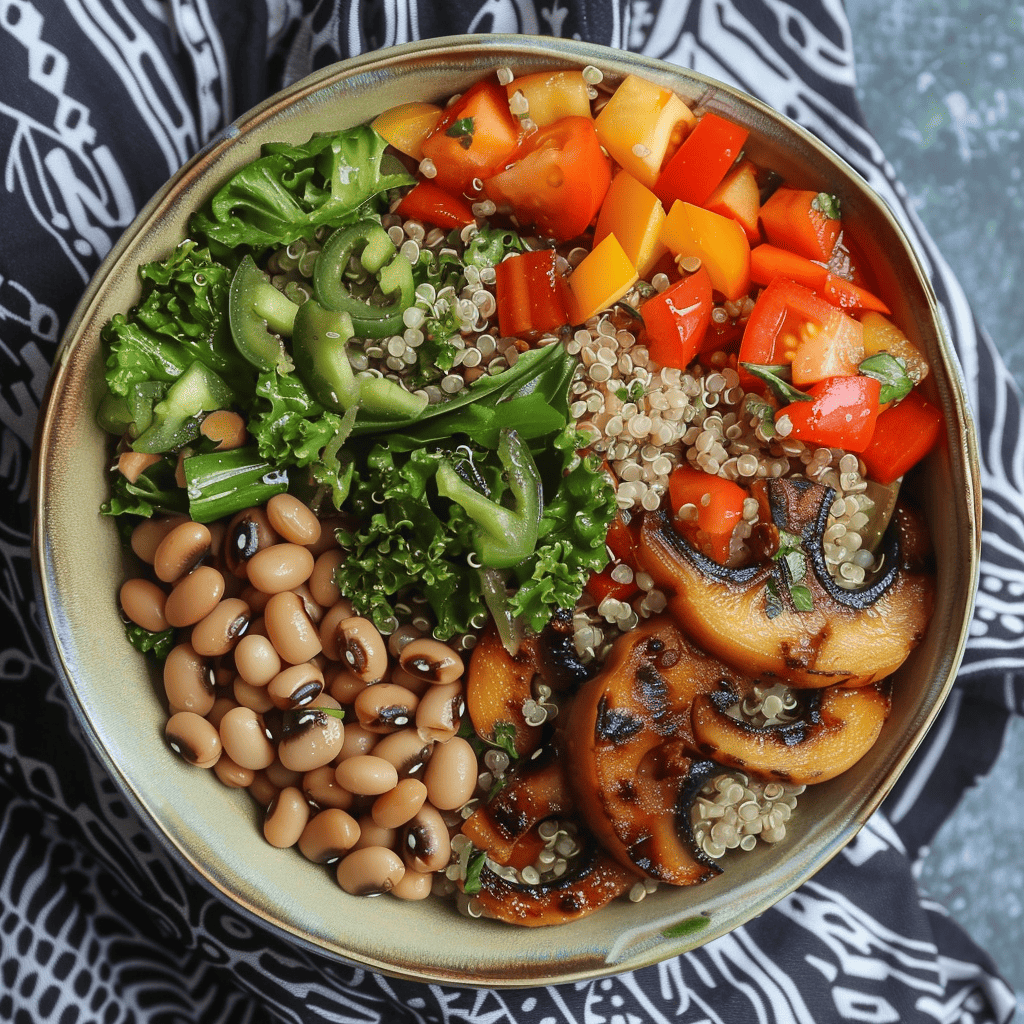
Injera with Misir Wat & Gomen – Authentic Ethiopian Platter
7. January 2026
Congolese Moambe Chicken – Palm Nut Stew in 70 Minutes
9. January 2026for advanced learners
45 minutes
1.5 hours
6-8 servings
A Monument in a Pot – For the Culinary Adventurer
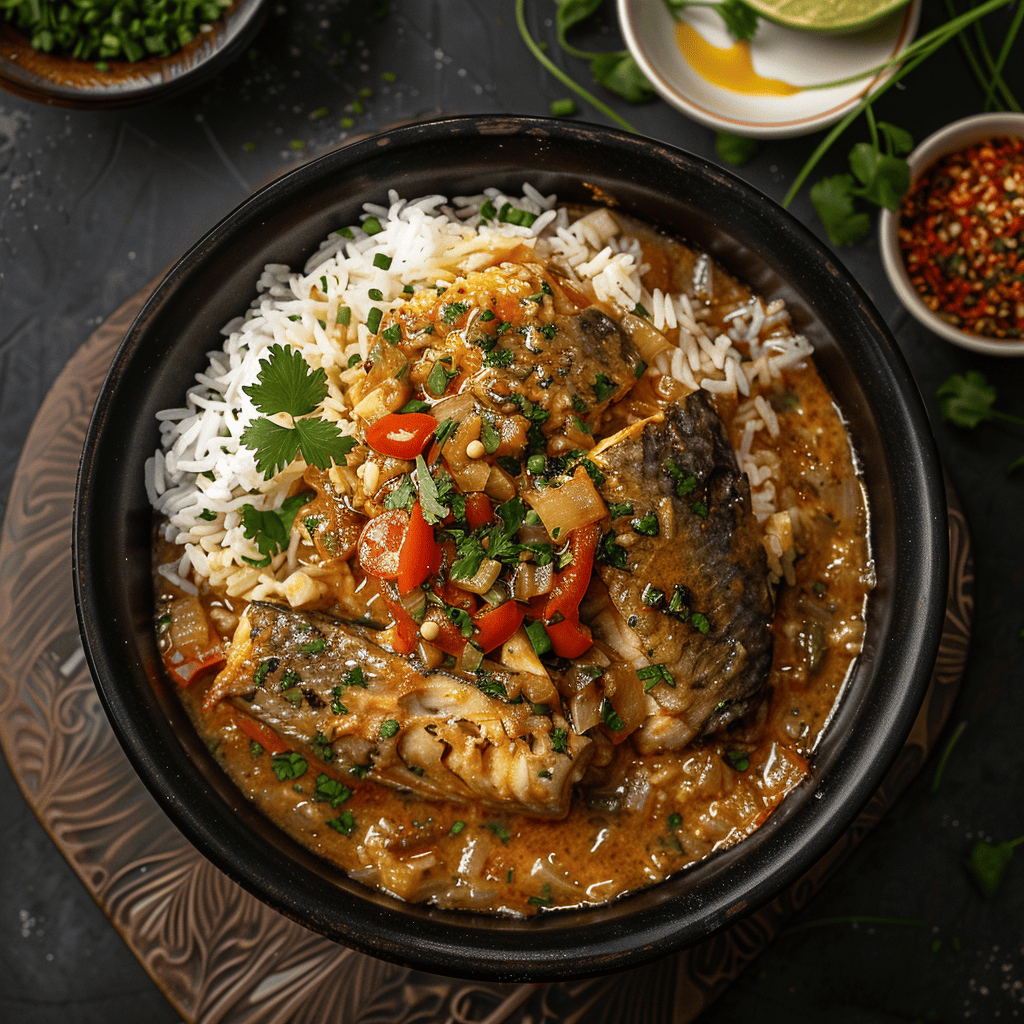
Instructions
- The Sacred Stuffing – Creating the Flavor Heart (Roff)
Begin by making the Roff, the aromatic green soul of the dish. Don’t just roughly chop the herbs; take the time to remove any thick stems from the parsley and cilantro to ensure a smooth paste. In a blender or with a mortar and pestle, combine the herbs with the garlic, a spoonful of strong mustard (which acts as an emulsifier and adds a subtle sharpness), the crumbled bouillon cube for depth, and the chili. Blend, adding just a teaspoon or two of water if necessary, until you achieve a vibrant, thick, and intensely fragrant paste.
This is more than a marinade; it’s a concentrated flavor bomb. Using a sharp knife, make 4-5 deep, diagonal slashes on each side of the cleaned fish, cutting down to the bone. This isn't just for presentation; these gashes allow the heat and flavor to penetrate the thickest parts of the fish. Massage the Roff paste vigorously into every crevice—inside the cavity, into the slashes, and all over the skin. Let the fish rest with this coating for a full 30 minutes. This resting period is crucial; it allows the salt from the bouillon and the acids from the herbs to begin gently seasoning and tenderizing the flesh from the outside in.
- The Flavor Foundation – Building the Umami Base
Choose your largest, heaviest-bottomed pot—this is a one-pot feast for a crowd. Heat the oil over medium-high heat. Carefully add the stuffed fish and sear it for 4-5 minutes per side until the skin is crisped and beautifully browned. The goal is not to cook it through, but to develop a fond (the browned bits) on the bottom of the pot and to seal in the Roff's flavors. Remove the fish and set it aside on a plate.
In the same now-flavorful oil, add the finely chopped onion. This is where you build color and sweetness. Cook the onion, stirring frequently, for a good 8-10 minutes. You are not just softening it; you are taking it to a deep, even golden-brown, almost to the edge of caramelization. This creates a rich, sweet base that will balance the tomatoes and fish. Now, add the tomato paste.
This is a critical moment: fry the tomato paste in the oil, stirring constantly, for 4-5 minutes. Watch as its color darkens from bright red to a deeper brick red and its scent transforms from sharp and tinny to sweet, rich, and rounded. You’ll see the oil start to separate and glisten around the edges—this is your sign that the paste is perfectly "cooked out," eliminating any raw acidity.
- The Vegetable Stage – Constructing the Aromatic Chamber
To the pot, add the sliced onions and the quartered fresh tomatoes. Pour in half of the hot broth—it will hiss and steam, deglazing the pot and scraping up all the precious browned bits. Bring this to a lively boil. Now, add your hardest, densest vegetables first: the wedges of cabbage and the chunks of carrots and sweet potatoes.
Season this layer generously with salt and pepper. Reduce the heat to a steady simmer, cover, and let cook for 15 minutes. This initial simmer is not about fully cooking the vegetables, but about allowing them to release their natural sweetness and starches into the broth, creating a flavorful cooking liquid for the rice and fish that will join later.
- The Fish Returns & Rice Joins – The No-Stir Pledge
After 15 minutes, the broth will be fragrant and the vegetables slightly tenderized. Gently nestle the seared fish and the whole Scotch bonnet peppers into the bubbling vegetable layer. Pour in the remaining broth and add the dried hibiscus leaves (dakhar) or smoked paprika, which will give the rice its characteristic reddish-golden hue.
Now, the most important step: Rinse your broken rice until the water runs clear, then drain it well. Sprinkle the damp rice evenly over the entire surface of the stew in one uniform layer. DO NOT STIR. From this moment on, the spoon is your enemy.
The rice must sit on top, acting as a lid, and steam solely from the aromatic vapors rising from the stew below. Stirring would muddy the layers, break the fish, and result in a gummy, porridge-like consistency
- The Final Steam – The Patient Transformation
Reduce the heat to the absolute lowest setting. To trap every molecule of steam, first cover the pot tightly with a layer of aluminum foil, pressing it around the rim, then seal it with the heavy lid. This double seal is traditional and ensures no steam escapes. Let it cook, undisturbed, for 40-45 minutes.
Fight the temptation to peek. Inside, a magic trick is happening: the rice is absorbing the colorful, spiced steam, each grain becoming tender, fragrant, and stained with the hues of the stew below, while the fish finishes cooking gently in the moist heat.
- To Serve: The Grand Reveal After the steam, turn off the heat and let it rest, still covered, for 5 minutes. Then, carefully remove the lid and foil. You’ll be met with a stunning spectacle: a perfect dome of fluffy, colorful rice. Using a large fork, gently fluff the rice from the top. To serve authentically, mound the rice onto a gigantic communal platter. Carefully place the whole fish on top as a centerpiece, then artfully arrange the soft vegetables around it. Ladle the remaining rich sauce (soupou kandia) from the bottom of the pot into a bowl to serve on the side.
Ingredients
🐟 1 whole firm white fish (sea bass, snapper, ~1.5kg), scaled & cleaned
🌿 Stuffing Paste (Roff): 1 bunch parsley, 1 bunch cilantro, 6 garlic cloves, 1 tbsp mustard, 1 bouillon cube, 1 chili, blended
🧅 3 large onions, 2 sliced, 1 finely chopped
🥫 150g tomato paste
🍅 4 ripe tomatoes, quartered
🥬 1 small cabbage, cut into wedges
🍠 2 sweet potatoes, chunked
🥕 3 carrots, chunked
🌶️ 2 Scotch bonnet peppers, whole
🍚 3 cups broken jasmine rice or long-grain
🫒 ½ cup vegetable oil
💧 6 cups fish or vegetable broth
🧂 Salt, black pepper
🟡 2 tbsp dried hibiscus leaves
(dakhar) or 1 tsp smoked paprika (for color)

About us
Dive into the unique world of African flavors with Nana! From traditional family recipes to modern creations, Nana brings the diversity and magic of the African continent straight to your kitchen. Get inspired, try authentic and creative dishes, and discover the heartfelt soul of African cuisine on your plate.