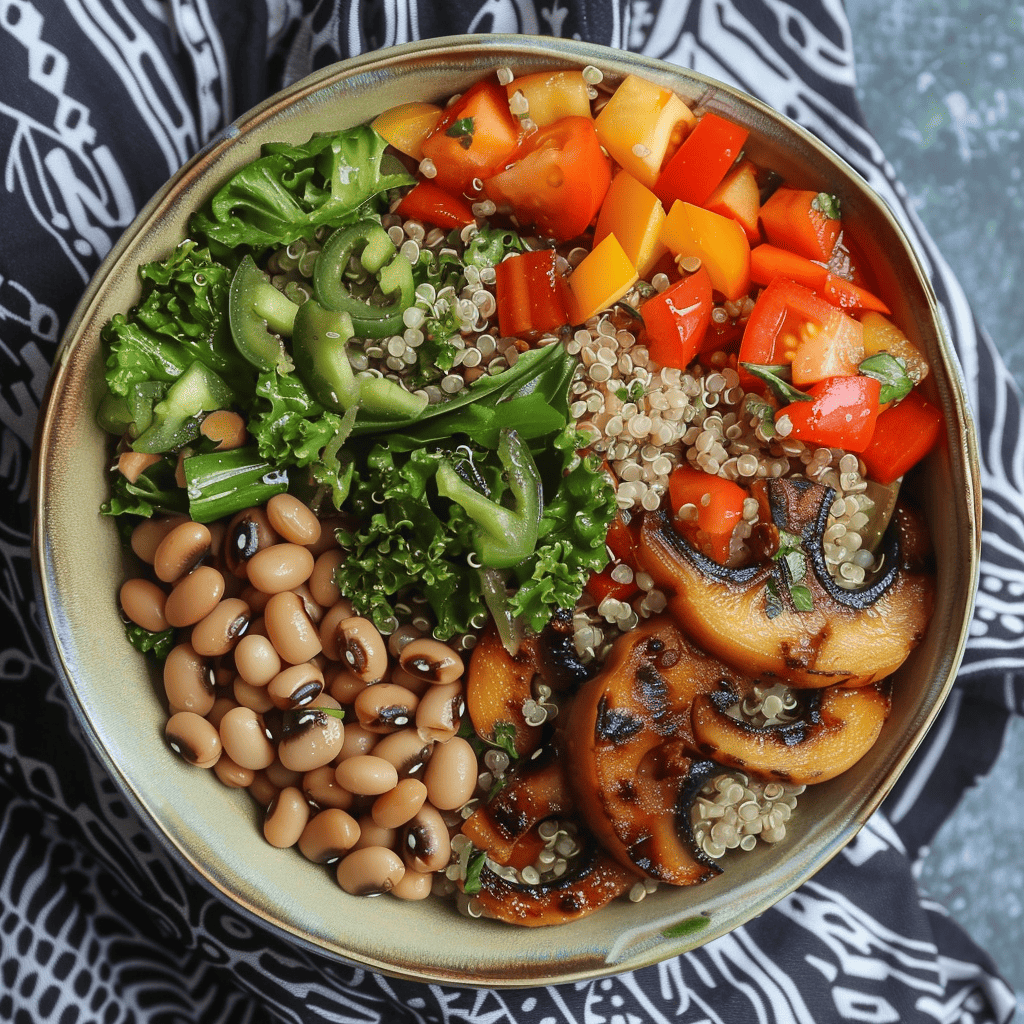
Ugandan Matooke & Groundnut Stew – A Hearty Plantain Feast
4. February 2026
Central African Bushmeat-Style Spicy Goat Stew (Modern Twist)
6. February 2026Difficulty
Difficult
Prep time
45 minutes
Cooking time
2 hours
Makes
6 - 8 servings
Gluten-Free
Yes
Deep, Earthy & Unforgettably Savory – For the Umami Explorer
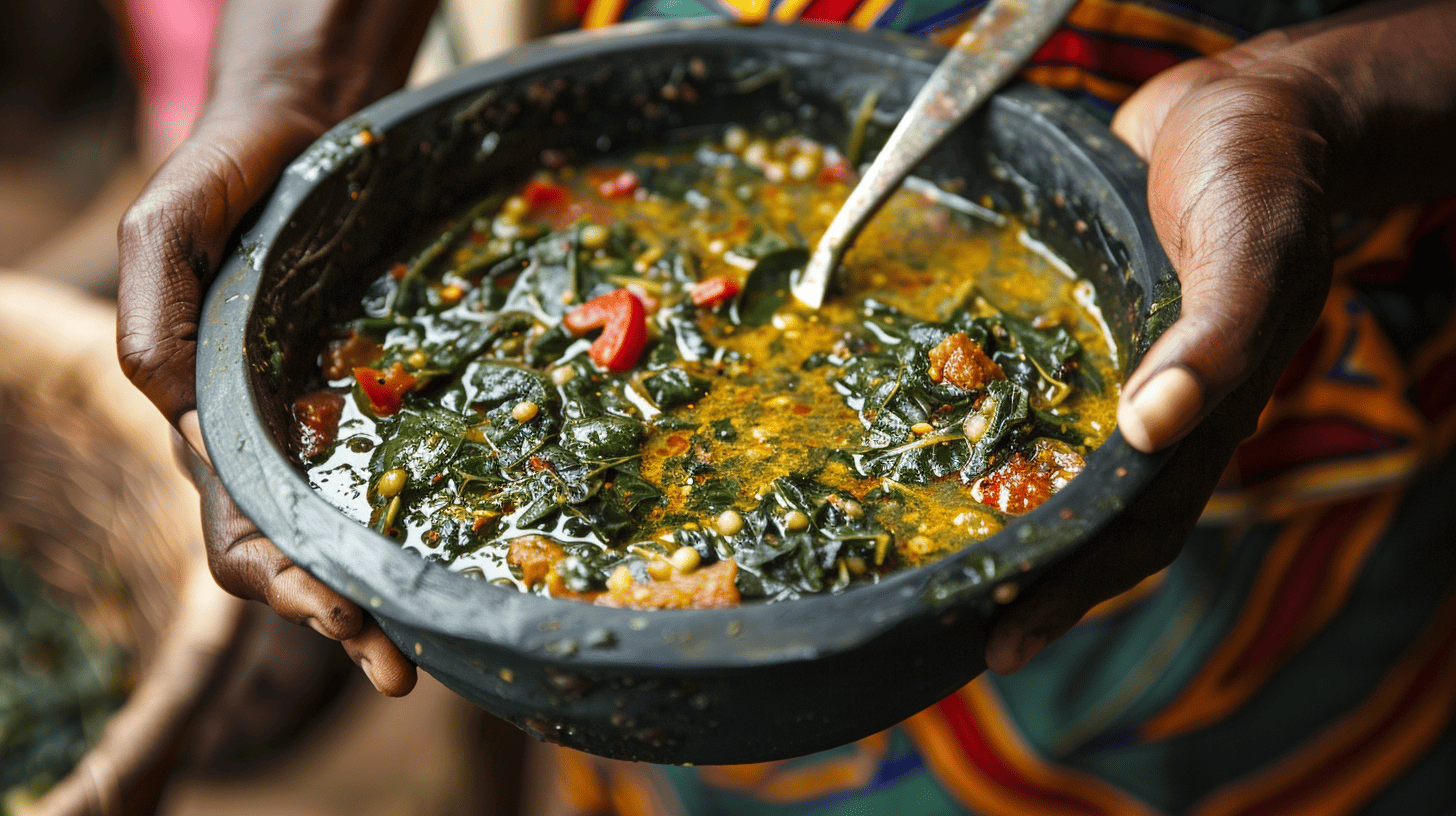
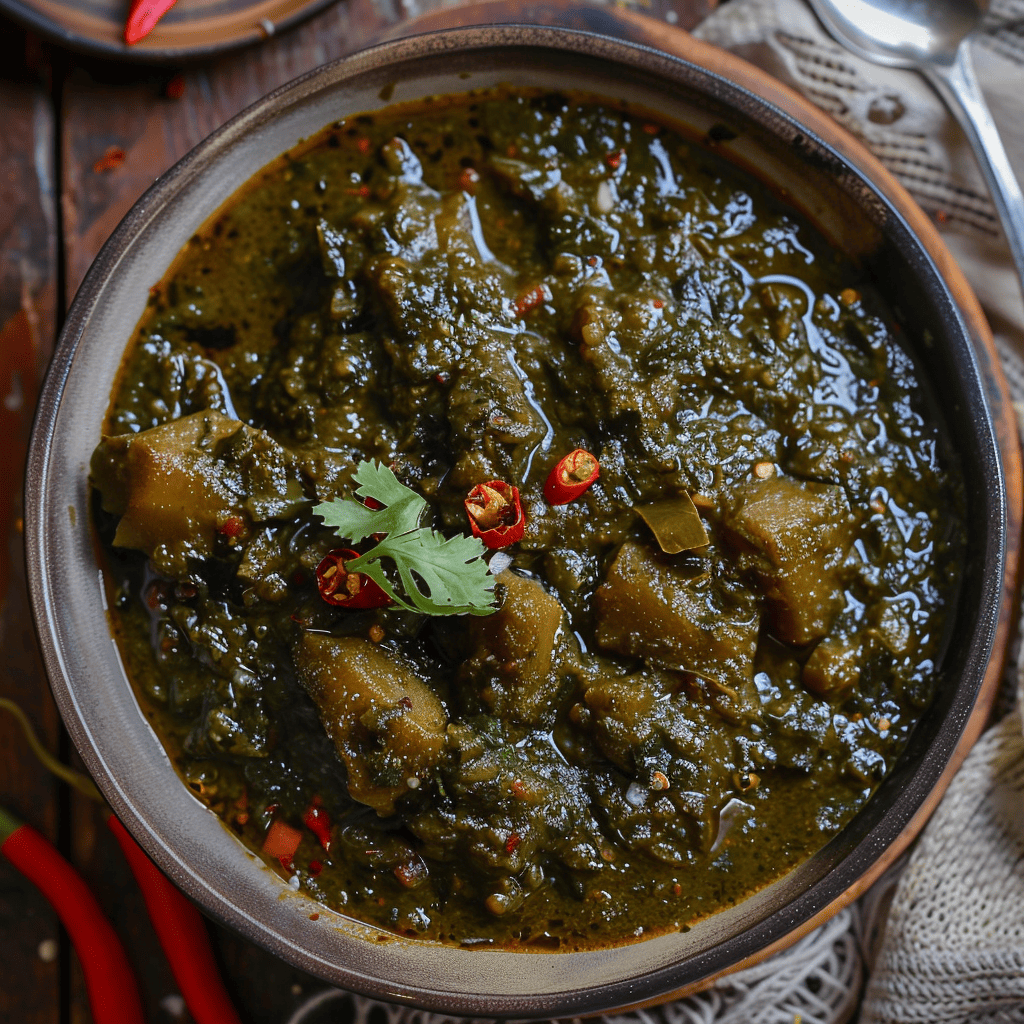
Few dishes embody umami like a Sierra Leonean Cassava Leaf Stew. This is a profound, slow-cooked creation where finely pounded cassava leaves transform into a dark green, almost black, velvety sauce, enriched with palm oil and a chorus of smoked and dried proteins. The flavor is deep, earthy, slightly bitter, and intensely savory. It’s a stew for the patient cook, for those who cherish complex, fermented-like flavors, and for anyone wanting to experience one of West Africa’s most iconic and soul-satisfying dishes.
Instructions
- The Protein Prep – Building the Umami Foundation Begin with your smoked proteins, the non-negotiable flavor pillars. Place the smoked dried fish (like mackerel or catfish) in a large bowl and cover with very hot water. Let it soak for a minimum of 20 minutes. This does two essential things: it rehydrates the tough flesh and, more importantly, draws out excess salt and any overly pungent smoky notes, leaving you with pure, concentrated umami. After soaking, drain the fish and use your fingers to carefully flake it into large pieces, diligently removing all tiny bones and any hard skin. Set this aside. Rinse the smoked turkey necks or dried beef under cold water to remove surface dust. In your largest, heaviest pot (a Dutch oven is perfect), cover the smoked meat with about 1 liter of cold water or broth. Bring to a boil, then reduce to a steady, bubbling simmer. Cover and let it cook for 45 minutes to an hour. This initial simmer is not about fully tenderizing the meat yet, but about creating a deeply flavored, smoky broth that will become the cooking liquid for everything else.
- The Aromatic Bomb – Blending the Flavor Catalyst While the meat simmers, focus on building the aromatic engine of the stew. In a blender, combine one of the chopped onions, the peeled garlic cloves, the Scotch bonnet peppers (adjust quantity for heat), the tomato paste, and the ground dried shrimp (a secret umami weapon). Add just enough water (about ½ cup) from the simmering pot to get the blades moving. Blend on high until you have a completely smooth, thick, reddish-brown paste. The texture should be akin to a loose pesto. This paste is the concentrated soul of the stew—it will be fried to intensify its flavor.
- The Palm Oil Fry & First Union After the meat has simmered for its initial period, remove it from the broth with a slotted spoon and set it aside. Keep the precious broth in the pot. Now, add the red palm oil to the same pot. Heat it over medium heat until it is fluid and fragrant. Carefully add the aromatic paste you just blended. It will sizzle impressively. Now, you must fry this paste, stirring almost constantly, for a full 8-10 minutes. This is a critical step. Watch as its color deepens from bright red to a darker brick red and its raw, sharp scent transforms into a rich, rounded, and deeply savory aroma. The oil will begin to separate slightly from the solids. This frying process, known as "cooking down," removes any raw vegetable taste and caramelizes the sugars, creating an incredibly complex flavor base.
- The Long, Slow Marriage – Where the Stew Finds Its Soul Once the paste is fried, return the par-cooked smoked meats and all the flaked, soaked fish to the pot. Pour in the remaining broth. Stir in the pounded cassava leaves and the ground peanuts or peanut butter. The stew will now be extraordinarily thick—this is correct. Stir well to ensure the leaves are fully submerged in the liquid. Reduce the heat to the lowest possible setting, just enough to maintain the faintest tremble of a simmer. Cover the pot. Here begins the sacred, slow simmer. You must cook the stew for a minimum of 1 hour, and ideally 1.5 to 2 hours, stirring thoroughly every 15-20 minutes to prevent the dense mixture from sticking and burning on the bottom. The cassava leaves, which started as a coarse, grainy mass, will slowly break down. Their chlorophyll will meld with the red palm oil, turning the stew a characteristic deep, dark forest green, almost black. The peanuts will dissolve, thickening the stew to a velvety, porridge-like consistency. The long cooking time is not optional; it tenderizes the smoked meats completely, allows the fish to disintegrate into the sauce, and most importantly, mellows the natural bitterness of the cassava leaves and cooks out any potential toxins, transforming them into something rich, earthy, and luxurious.
- The Final Balance – Adjusting the Profound Pot After the long simmer, the stew should be incredibly thick, with the leaves fully broken down and the oil shimmering on the surface. Remove it from the heat. Now, taste with intention. The dominant notes should be deep umami, earthy greens, and a subtle nuttiness, all carried by the rich body of the palm oil. It will almost certainly need salt, but add it gradually. The smoked fish and meats can vary greatly in salinity. The stew should have a gentle heat from the peppers that warms rather than burns. If you desire more heat, you can mash one of the whole peppers into the stew at this stage.
Ingredients
- 🌿 500g frozen pounded cassava leaves (find in African stores)
- 🐟 200g smoked dried fish (mackerel, catfish)
- 🍖 200g smoked turkey neck or dried beef
- 🥜 ½ cup ground peanuts or peanut butter
- 🫒 ¾ cup red palm oil
- 🧅 3 onions, chopped
- 🧄 1 whole bulb garlic, peeled
- 🔥 3-4 Scotch bonnet peppers
- 🍤 100g dried shrimp (ground in blender)
- 🍅 2 tbsp tomato paste
- 💧 1-1.5 liters broth or water
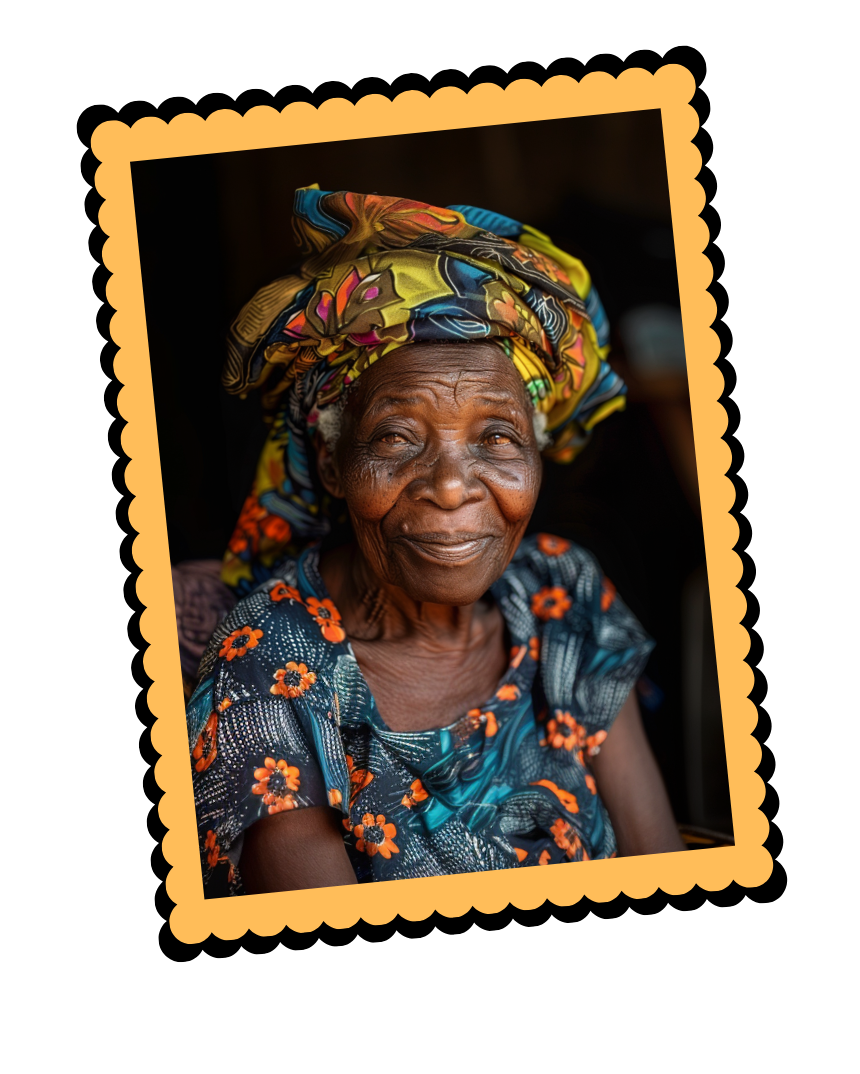
About us
Dive into the unique world of African flavors with Nana! From traditional family recipes to modern creations, Nana brings the diversity and magic of the African continent straight to your kitchen. Get inspired, try authentic and creative dishes, and discover the heartfelt soul of African cuisine on your plate.