Liberian Potato Greens & Chicken – A One-Pot Pepper Soup
22. January 2026
Algerian Chorba Frik – Fragrant Lamb & Freekeh Soup
24. January 2026Easy
15 minutes
40 minutes
4 servings
Gluten-Free
Yes (check mustard)
Dairy-Free
No
Description
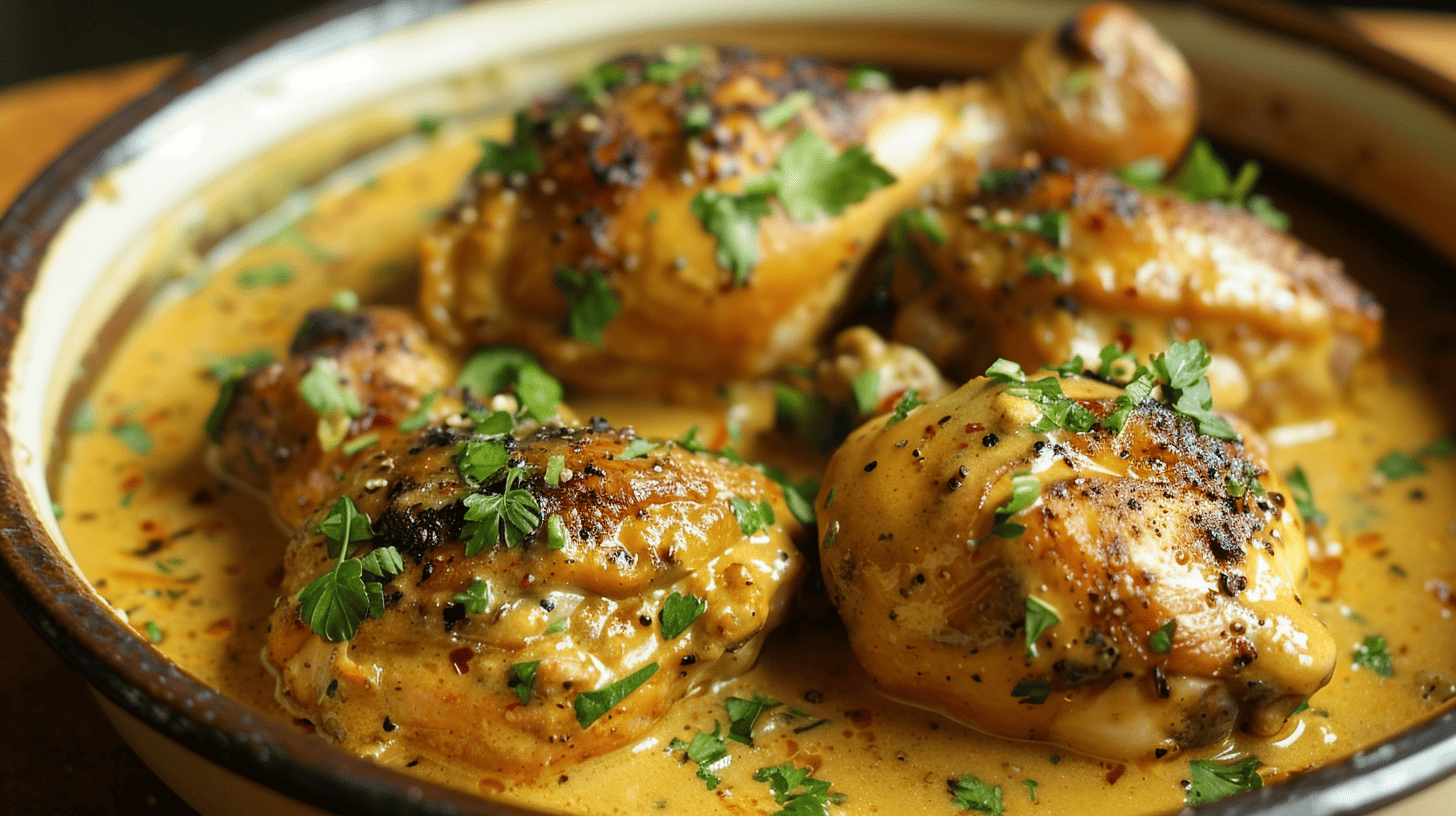
Instructions
- Sear the Chicken – Building the Flavor Foundation
The journey to a perfect sauce begins with the chicken itself. Remove the thighs from the refrigerator at least 20 minutes before cooking to take the chill off, ensuring more even cooking. Use paper towels to pat each piece meticulously dry on all sides.
This is a critical step; any surface moisture will create steam, preventing the skin from achieving the golden, crackling crispness we desire. Season the chicken generously on both sides not just with salt and black pepper, but also with a light dusting of smoked or sweet paprika. The paprika adds a subtle depth and a beautiful color to the skin.
In a large, heavy-bottomed skillet or braiser (one that has a tight-fitting lid), heat the combination of butter and neutral oil over medium-high heat. The butter provides flavor, while the oil raises the smoke point, preventing the butter from burning. Once the fat is hot and shimmering, carefully add the chicken pieces, skin-side down, in a single layer without crowding. You should hear an immediate, confident sizzle. Resist the urge to move them for a full 6-7 minutes. This undisturbed time allows the skin to render its fat, contract, and form an impeccable, golden-brown crust. Peek underneath; if it’s perfectly colored, flip each piece and sear the other side for 4-5 minutes until similarly browned. This searing isn't just for texture; it creates a treasure trove of flavorful browned bits (the fond) in the pan and renders fat that will carry the sauce. Transfer the chicken to a plate; it will be only partially cooked through, which is perfect. - Build the Aromatic Base – Deglazing for Depth Without cleaning the pan, reduce the heat to medium. In the glorious rendered chicken fat and butter, add the finely chopped onion. A pinch of salt will help them sweat. Sauté, stirring occasionally, for 5-6 minutes until they become soft, translucent, and sweet. Now, add the minced garlic and fresh thyme sprigs. Stir constantly for just 60 seconds—the goal is to fragrantly bloom the garlic without letting it burn, which would introduce bitterness. Here comes a pivotal French technique: deglazing. Pour in the dry white wine all at once. It will hiss and steam dramatically. Immediately, using a wooden spoon or spatula, scrape vigorously to dissolve all the precious, caramelized fond from the bottom of the pan. This incorporates those deep, savory flavors into the liquid, which forms the soul of your sauce. Let the wine simmer vigorously, unreduced, for 3-4 minutes until it has reduced by about half. This cooks off the raw alcohol taste, leaving behind a concentrated, acidic, and aromatic base.
- Create the Creamy Mustard Sauce – The Heart of the Dish Reduce the heat to medium-low. Now, whisk in the Dijon mustard vigorously until it is fully incorporated into the reduced wine and onion mixture. It will form a thick, fragrant paste. Slowly pour in the chicken broth while continuing to whisk, creating a smooth, unified liquid. At this stage, the sauce will be thin and quite sharp—this is normal and will balance beautifully later. Bring this mixture to a very gentle simmer, just a few bubbles breaking the surface.
- Braise to Tenderness – Infusing the Chicken Return the seared chicken pieces to the pan, nestling them skin-side up in the sauce. The sauce should come about halfway up the sides of the chicken. Cover the pan tightly with its lid. Reduce the heat to low to maintain the gentlest possible simmer—you want a lazy bubble every few seconds. Let it braise undisturbed for 25 minutes. This gentle, moist-heat cooking accomplishes two things: it finishes cooking the chicken to succulent, fall-off-the-bone tenderness, and it allows the chicken to passively season the sauce with its juices while the sauce flavors the meat.
- Finish with Cream & Lemon – The Luxurious Balance
After braising, the chicken will be perfectly cooked. Using tongs, carefully transfer it to a clean serving platter and tent loosely with foil. Now, turn your attention to perfecting the sauce. Increase the heat to medium. Whisk the crème fraîche or heavy cream into the simmering sauce until fully incorporated. Let it bubble gently for 4-5 minutes.
This allows the sauce to reduce slightly, thickening to a luxurious, coating consistency that will beautifully nap the chicken. Remove the pan from the heat entirely. Stir in the fresh lemon juice—this is not a garnish, but a crucial balancing agent. The bright acidity cuts through the richness of the cream and mustard, lifting all the flavors and preventing the dish from feeling heavy.
Taste the sauce thoughtfully. It should be creamy, tangy, savory, and bright. Adjust the final seasoning with salt and freshly ground black pepper. Pour the exquisite sauce over the waiting chicken on the platter. - To Serve: This dish demands a starchy companion to savor every drop of the sauce. Serve it with a mound of fluffy white rice, a side of soft fufu for an authentic Central African touch, or, in a nod to its French heritage, plenty of warm, crusty baguette for mopping.
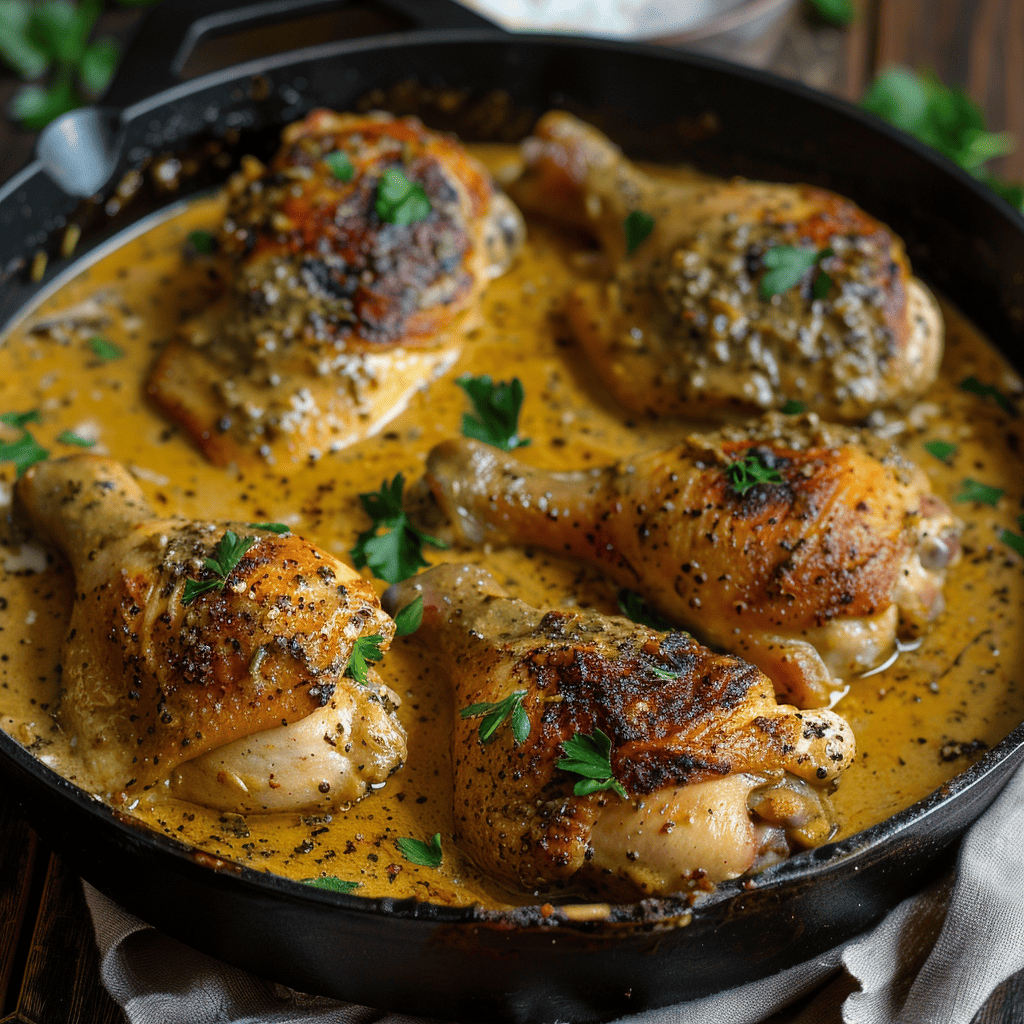
The Mustard Mandate – The Non-Negotiable Core
Authenticity and flavor integrity demand a strong, smooth Dijon mustard. This is not the place for coarse-grained, sweet, or mild mustards. True Dijon, with its sharp, clean, and bracing tang of white wine and verjuice, is the irreplaceable backbone of the sauce. Its acidity and pungency perform the essential task of cutting through the unctuous richness of the cream and the rendered chicken fat, creating a balanced, sophisticated profile rather than a one-note creamy dish. It provides the "zing" that defines Poulet au Moutarde and elevates it from a simple stew to a culinary statement.
A Colonial Culinary Fusion – The Story on a Plate
This dish is a delicious and direct artifact of Gabon’s French colonial history, representing a seamless and successful culinary fusion. French techniques—the careful searing, the deglazing with wine, the creation of a reduced cream (velouté) sauce—were masterfully adopted by Gabonese cooks. They applied these methods to locally abundant, high-quality poultry and incorporated the bold, straightforward seasoning they favored. The result was not a mere imitation of a French recipe, but the birth of something new: a distinctly Gabonese national favorite that proudly carries the sophistication of French cuisine while remaining rooted in its local context. It stands as a testament to how food cultures can meet, adapt, and create enduring classics.
Ingredients
- 🍗 8 chicken thighs, bone-in, skin-on
- 🧅 1 large onion, finely chopped
- 🧄 4 garlic cloves, minced
- 🥂 200 ml dry white wine
- 🍶 100 ml strong Dijon mustard
- 🥛 200 ml crème fraîche or heavy cream
- 🍗 500 ml chicken broth
- 🌿 4 sprigs fresh thyme
- 🫒 2 tbsp butter + 1 tbsp oil
- 🍋 Juice of ½ lemon
- 🧂 Salt, black pepper, paprika

About us
Dive into the unique world of African flavors with Nana! From traditional family recipes to modern creations, Nana brings the diversity and magic of the African continent straight to your kitchen. Get inspired, try authentic and creative dishes, and discover the heartfelt soul of African cuisine on your plate.