Tunisian Shakshuka with Merguez – Baked Eggs in Spicy Tomato Sauce
17. January 2026
Liberian Potato Greens & Chicken – A One-Pot Pepper Soup
22. January 2026Easy
20 minutes
30 minutes
4 servings
Description
Instructions
- Marinate the Star – Infusing the First Layer of Flavor:
Begin by laying your fish chunks on a clean kitchen towel or paper towels and gently pat them completely dry. This crucial step ensures a clean sear if you were to fry them and, more importantly, allows the marinade to cling properly instead of sliding off a wet surface. In a medium mixing bowl, combine half of your grated ginger, half of the minced garlic, one heaping teaspoon of the ground turmeric, and a generous three-fingered pinch of salt. Add the fish chunks and, using your impeccably clean hands or a spoon, toss and fold gently until every piece is evenly coated in the vibrant yellow paste.
Set this aside at room temperature for no more than 20-25 minutes while you build the curry base. Letting it sit longer, especially with the acid from the ginger, can start to "cook" the exterior of the fish, leading to a mushy texture later. This short marination is about flavor infusion, not tenderization
- Build the Aromatic Foundation – The Scent of the Swahili Coast:
Place your deep skillet or heavy-bottomed pot over medium heat and add the vegetable oil. Allow it to heat until it shimmers, a sign it's ready to carry flavors. Add the finely chopped red onion along with a small pinch of salt—the salt helps draw out the onion's moisture, encouraging it to soften rather than brown too quickly. Cook, stirring occasionally, for a good 5 to 7 minutes. You are not seeking caramelization here, but a deep, sweet translucency where the onions have surrendered their sharp bite and become soft and pliable. Now, add the remaining garlic and ginger, along with the ground coriander. This is the moment your kitchen will transform. Stir constantly and vigorously for 30 to 45 seconds. You will be hit with an incredible, fragrant wave—the sharp, floral note of ginger, the pungent warmth of garlic, and the citrusy, slightly sweet aroma of toasting coriander. The moment you smell this fragrance bloom, move to the next step to prevent burning.
- Create the Flavor Base – The Heart of the Curry:
Here is where the magic intensifies and the color deepens. Stir in the remaining turmeric and your grated tomato or passata. A critical note on tomatoes: if you desire a richer, deeper, and slightly darker sauce, do not hesitate to add an extra tomato or an extra tablespoon of tomato paste. The tomato solids contain natural sugars that caramelize as they cook down. More tomato means more of these sugars, which, when patiently cooked, will deepen in color from a bright red to a more brick-red or burnt orange hue, adding a wonderful, subtle sweetness and complexity to the final curry. It also contributes to a thicker sauce body. Cook this mixture, stirring frequently and scraping the bottom of the pot, for 5 to 8 minutes. You are waiting for two key visual cues: first, the raw, sharp scent of tomato will mellow and sweeten; second, the mixture will thicken noticeably, and you will see the oil begin to separate from the solids, forming tiny droplets around the edges of the pan. This stage, known as "cooking out the masala," is non-negotiable. It concentrates the flavors, removes any raw tang, and creates the robust foundation upon which the creamy coconut milk will later build. This is your masala base, the very soul of the dish.
- The Creamy Cascade – Uniting Fire and Richness:
Now, pour in the entire can of rich, full-fat coconut milk. It will sizzle and steam as it hits the hot masala. Add the fragrant curry leaves (if using—they impart a subtle, smoky citrus note that is utterly distinctive) and the whole, pierced bird's eye chilies. Using your spoon or a whisk, stir thoroughly and confidently to fully integrate the golden-red spice paste with the white coconut milk, creating a uniform, sunset-orange liquid. Bring this to a gentle, bubbling simmer—not a rolling boil. Once simmering, reduce the heat to low-medium and let it bubble quietly, uncovered, for 8 to 10 minutes. During this time, the sauce will reduce slightly, thickening to a light cream consistency. The flavors will meld and marry: the heat from the chilies will infuse, the aroma of the curry leaves will permeate, and the sharp edges of the spices will round out. If you prefer a saucier curry with more gravy for your rice, this is the moment to add the optional ½ cup of broth.
- The Gentle Poach – A Delicate Hand with the Fish:
Reduce the heat to its lowest setting. Now, with the care of an artisan, gently slide the marinated fish chunks into the simmering sauce. Do not simply drop them in from a height, as this can cause hot sauce to splash. Arrange them in a single layer if possible. Most importantly, resist the urge to stir. The fish is delicate and will break apart. Instead, carefully spoon the hot sauce over the top of each piece to ensure it is fully submerged and coated. Cover the pot tightly with a lid. Let the fish poach gently in the aromatic bath for 6 to 9 minutes. The exact time depends entirely on the thickness of your chunks. The fish is perfectly done when it turns opaque throughout and flakes easily with a gentle fork, but is still moist and holds its shape. Overcooking will make it tough and dry.
- The Bright Finish – The Non-Negotiable Spark of Life:
As soon as the fish is cooked, immediately turn off the heat. Do not let it sit on residual heat in the sauce. Now, perform the final, transformative act: drizzle the fresh lime juice evenly over the entire curry. Follow this by scattering the chopped fresh cilantro generously on top. Do not stir yet. The lime juice, with its bright, sharp acidity, performs a culinary miracle. It cuts through the rich, fatty coconut milk, lifts and defines all the layered spices, and adds a dimension of freshness that makes the dish sing. Stirring it in at the very end preserves its vibrant character. Give the pot one final, gentle shake to distribute the lime and cilantro, or fold once or twice with a broad spoon.
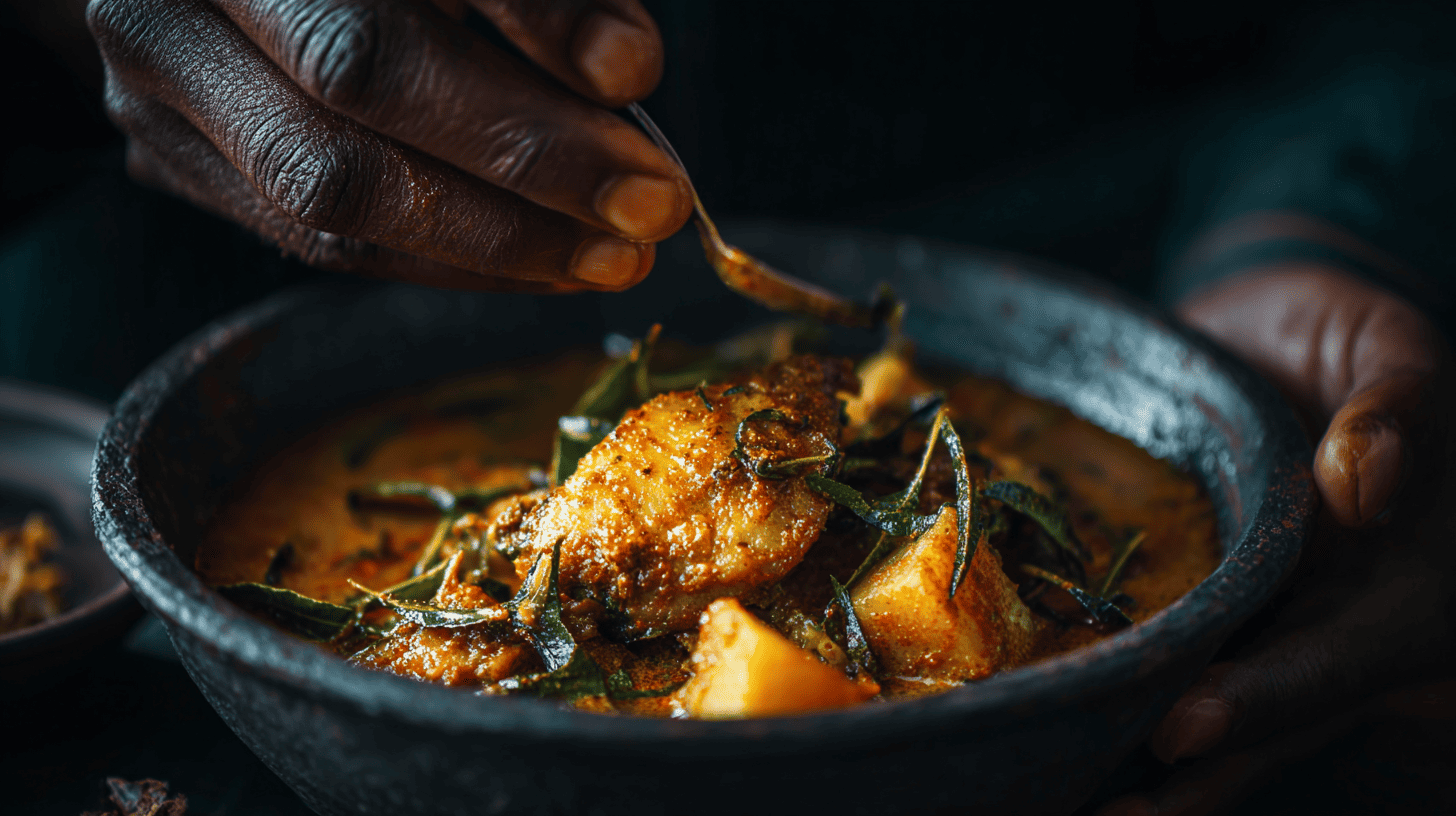
To Serve:
Serve this Tanzanian coconut fish curry immediately, while it is steaming hot. Ladle generous portions over a bed of fluffy, white basmati rice or alongside soft, warm chapati perfect for scooping up the luxurious sauce. As you serve, remember to advise your guests to watch for and set aside the whole chilies and curry leaves—they are flavor infusers, not meant to be eaten whole.
The Turmeric & Lime Alliance:
While ginger and garlic are common, the high amount of turmeric in this curry is key. It gives the dish its vibrant golden color, a warm earthy flavor, and is a cornerstone of Swahili coastal cooking. Paired with the sharp lime juice added at the end, it creates a flavor profile that is both comforting and invigorating. Don't be tempted to skip the lime!
Make It Your Own:
*No fresh fish? Large peeled raw shrimp work perfectly, reducing the poaching time to 3-4 minutes. For a vegetable-packed version, add chunks of potato or sweet potato to the sauce in step 4 and let them cook until tender before adding the fish.*
Ingredients
- 🐟 1.5 lbs firm white fish fillets (cod, snapper, tilapia), cut into chunks
🥥 1 can (400ml) coconut milk (full-fat for creaminess)
🧅 1 large red onion, finely chopped
🍅 2 ripe tomatoes, grated (discard skin) or ½ cup passata
🫚 2-inch piece fresh ginger, grated
🧄 5 cloves garlic, minced
🟡 1 tbsp ground turmeric (FRESH is a game-changer if you can find it)
🌿 1 tsp ground coriander
🍃 4-5 fresh curry leaves (optional but magical)
🔥 1-2 fresh bird's eye chilies, pierced (optional, for heat)
🍋 Juice of 1-2 limes
🌱 Handful fresh cilantro, chopped
🫒 3 tbsp vegetable oil
🧂 Salt to taste
💧 ½ cup fish or vegetable broth (optional, for more sauce)

About us
Dive into the unique world of African flavors with Nana! From traditional family recipes to modern creations, Nana brings the diversity and magic of the African continent straight to your kitchen. Get inspired, try authentic and creative dishes, and discover the heartfelt soul of African cuisine on your plate.