Senegalese Thieboudienne – The National Fish & Rice Dish
8. January 2026
Moroccan Chicken Tagine with Apricots & Almonds
10. January 2026Intermediate
Easy
Prep time
25 minutes
Cooking time
45 minutes
Makes
4-6 servings
Gluten-Free:
Yes
Dairy-Free:
Yes
The National Dish in a Pot – For Curious Cooks & Comfort Food Lovers
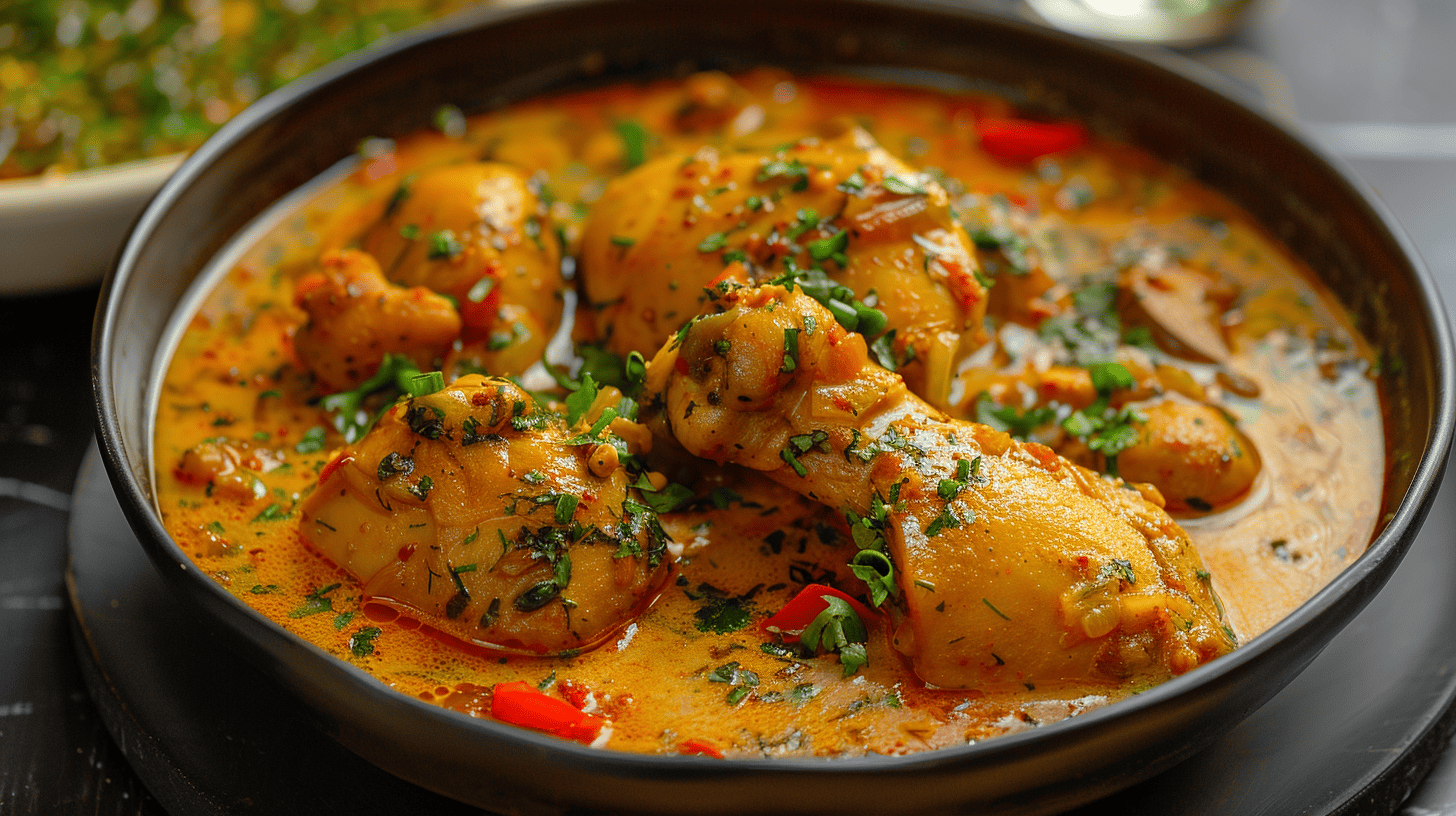
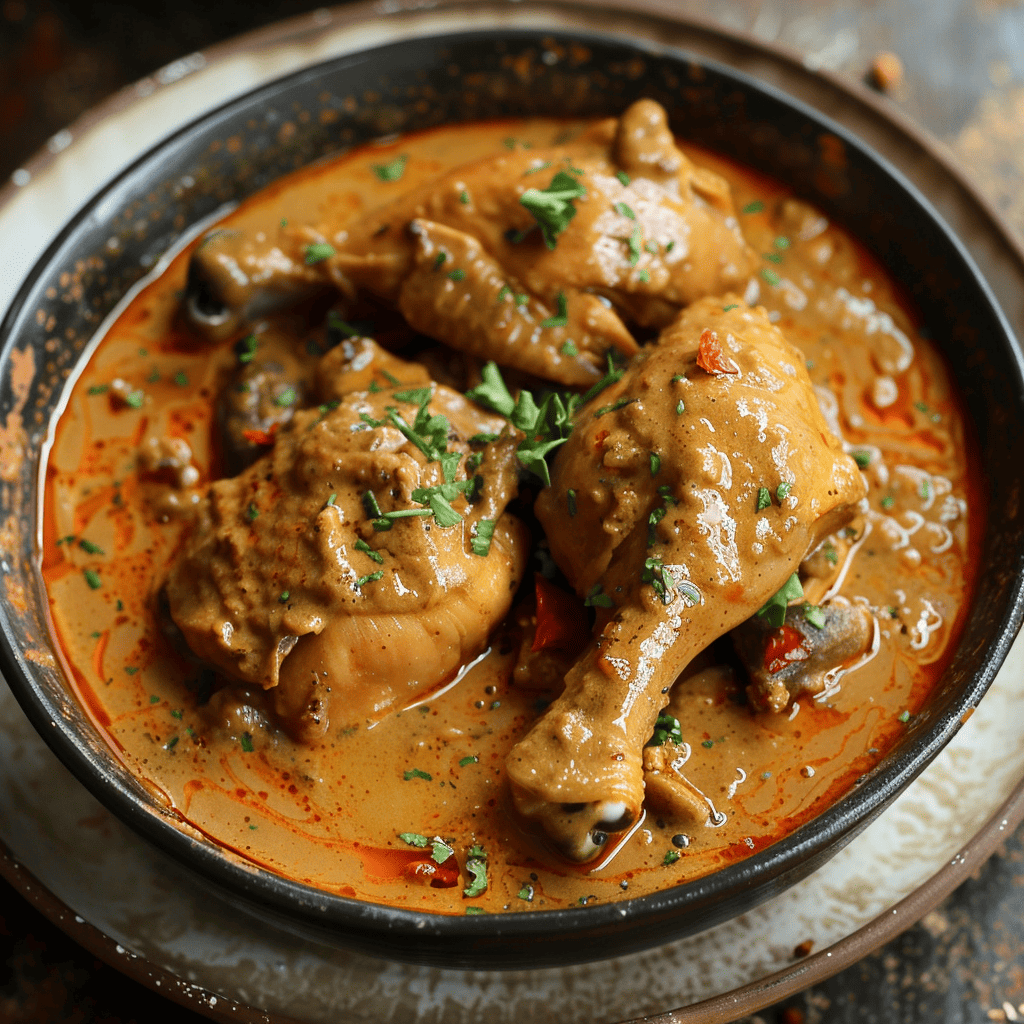
Moambe, Muamba, or Nyembwe—spellings vary, but its status as a culinary icon across the Congo Basin is unchallenged. This is the dish that defines a region, a rich, rust-red stew where the unique, earthy creaminess of palm nut pulp envelops tender chicken. This version streamlines the process while guarding its soul, making it accessible for any home cook wanting to taste Central Africa's most celebrated comfort food. It’s for the flavor adventurer ready to discover palm fruit’s magic.
Instructions
- Brown & Build the Base – The Foundation of Flavor
Begin by preparing your chicken. Pat the pieces thoroughly dry with paper towels—this is crucial for achieving a proper sear, not a steam. Season them generously on all sides with salt and black pepper. In your heaviest, deepest pot or Dutch oven, heat the red palm oil over medium-high heat until it shimmers and releases its characteristic nutty aroma. Working in batches to avoid crowding the pan, add the chicken pieces skin-side down (if using skin-on). Let them sear, undisturbed, for a good 5-7 minutes until the skin is deeply golden and crisped. Flip and sear the other side. This browning isn't just for color; it's the Maillard reaction at work, creating a foundation of complex, savory flavors and fond (the browned bits) on the bottom of the pot that will enrich the entire sauce. Remove the chicken and set it aside.
In the same pot, with all the flavorful drippings, add the chopped onions. Reduce the heat to medium. The onions will sizzle as they hit the oil. Add a pinch of salt to help them sweat. Cook, stirring occasionally, for 6-8 minutes until they are fully softened and translucent. Now, add the minced garlic and grated ginger. Stir constantly for about 60 seconds until their raw fragrance blossoms into something warm and aromatic.
Add the grated fresh tomato or tomato paste. Cook this mixture, stirring frequently, for a full 5 minutes. You will see it thicken and darken as the tomatoes' moisture evaporates and their sugars begin to caramelize. This step, known as "cooking out" the tomatoes, mellows their acidity and builds a sweet, concentrated base for the rich palm nut to come.
- Introduce the Star – The Alchemical Moment Now comes the transformative moment. Open your jar of palm nut pulp (often labeled as cream or butter). It will be thick, dense, and a vivid reddish-orange with oil likely separated on top. Stir the contents of the jar well, then add it all to the pot. At first, it will seem like a mistake—a thick, pasty, oily mass that clings to the onions. This is normal. Using a sturdy wooden spoon, stir and fold the pulp into the aromatics for a minute or two, allowing it to warm and become more fluid. Then, take your warm chicken broth and begin adding it gradually. Pour in about one cup at a time, switching to a whisk for this step. Whisk vigorously and constantly after each addition until the palm nut pulp is completely smooth and emulsified with the broth before adding more. This patient, gradual incorporation is the secret to a velvety, lump-free sauce. As you whisk, you'll witness the alchemy: the mixture will transform into a stunning, smooth, creamy, and vibrantly orange-red sauce, the color of a tropical sunset. This is the iconic moambe sauce base.
- The Flavor Infusion – The Patient Simmer Once all the broth is incorporated and the sauce is smooth, carefully return the browned chicken pieces and any accumulated juices to the pot. The sauce should come about halfway up the chicken. Add the whole Scotch bonnet peppers (they will infuse a gentle, fruity heat without overwhelming spiciness) and the bay leaves. Bring the pot to the very beginning of a simmer—just a few lazy bubbles breaking the surface—then immediately reduce the heat to its lowest setting. Cover the pot tightly. Let it cook gently for 35-40 minutes. This low-and-slow simmer is where the magic of infusion happens. The chicken becomes fall-off-the-bone tender, absorbing the unique flavor of the palm nut. The sauce reduces and thickens naturally, concentrating its flavors into a luxurious, gravy-like consistency that will coat the back of a spoon. Stir gently once or twice during cooking to ensure nothing sticks to the bottom, but avoid breaking up the chicken.
- Final Seasoning & Serve – The Grand Presentation After the simmer, the chicken should be incredibly tender and the sauce thick and aromatic. Using tongs, remove and discard the bay leaves and the whole Scotch bonnet peppers (you can leave one in for visual appeal if you wish). Now, taste the sauce critically. It will likely need another generous pinch of salt and a grind of pepper to make all the flavors sing. Remember, this is a rich stew meant to be paired with bland starches.
- To Serve: Ladle the stew into a deep serving bowl or serve directly from the pot. The traditional and perfect accompaniment is a large mound of smooth, stretchy fufu, which you pinch, roll, and use to scoop up the sauce and chicken. Alternatively, serve over plain white rice or boiled green plantains. For a final textural contrast, garnish with a sprinkle of roughly chopped roasted peanuts, which add a delightful crunch against the creamy sauce.
Ingredients
- 🍗 1.5 kg chicken pieces (thighs & drumsticks)
- 🥫 1 jar (approx. 400g) palm nut pulp/miracle fruit pulp (moambe)
- 🧅 2 large onions, finely chopped
- 🧄 6 garlic cloves, minced
- 🫚 3 cm ginger, grated
- 🍅 2 ripe tomatoes, grated or 3 tbsp tomato paste
- 🌶️ 1-2 Scotch bonnet peppers, whole
- 🌿 2-3 bay leaves
- 💧 500 ml chicken broth
- 🫒 2 tbsp red palm oil (or vegetable oil)
- 🧂 Salt, black pepper
- 🥜 Optional garnish: roasted peanuts, chopped

About us
Dive into the unique world of African flavors with Nana! From traditional family recipes to modern creations, Nana brings the diversity and magic of the African continent straight to your kitchen. Get inspired, try authentic and creative dishes, and discover the heartfelt soul of African cuisine on your plate.